
Artificial Intelligence Course in Hyderabad
with
100% Placements & Internships
- Comprehensive Curriculum
- Expert Trainers
- Real-Time Projects
- Certification
Artificial Intelligence Course in Hyderabad
Batch Details
| Trainer Name | Bharath SreeRam |
| Trainer Experience | 25+Years |
| Timings | Monday to Saturday (Morning and evening) |
| Next Batch Date | 18-Feb-2026 AT 11:00 AM |
| Training Modes | Classroom & Online |
| Call us at | +91 9000360654 |
| Email us at | aimlopsmasters.in@gmail.com |
| For More Details at | For More Demo Details |
Artificial Intelligence Institute In Hyderabad
Why choose us?
- Industry-Aligned DevOps to MLOps Curriculum
- Real-Time Case Studies & Use Cases
- Expert-Led Mentorship by Certified Trainers
- Hands-On Live Project Experience
- Advanced ML Model Deployment Skills
- End-to-End CI/CD Pipeline Training
- Cloud & Multi-Platform Integration Focus
- Performance Monitoring & Automation Expertise
- Flexible Learning Modes – Online & Classroom
- Dedicated Placement Assistance & Guidance
- Post-Course Lifetime Support & Updates
- Personalized Career Growth Roadmap
Artificial Intelligence Training In Hyderabad
Artificial Intelligence Curriculum
Module 1: Introduction to DevOps & MLOps
- What is DevOps?
- What is MLOps?
- Difference: DevOps vs MLOps
- Why transition from DevOps to MLOps?
- Key tools & ecosystem overview
Module 2: Software Development Lifecycle (SDLC) & ML Lifecycle
- SDLC phases
- ML project lifecycle (data, training, deployment, monitoring)
- Challenges of ML in production
- Mapping SDLC to ML lifecycle
Module 3: Version Control & Collaboration
- Git basics (branching, merging, pull requests)
- GitHub/GitLab for collaboration
- Managing ML code vs data vs model versions
- DVC (Data Version Control)
Module 4: Containerization Basics
- What is Docker?
- Creating & running Docker containers
- Docker for ML environments
- Best practices for reproducibility
Module 5: CI/CD in DevOps
- What is CI/CD?
- Jenkins, GitHub Actions, GitLab CI
- Build pipelines in DevOp
- Automated testing strategies
Module 6: CI/CD for Machine Learning (CICD for ML)
- Differences between CI/CD and ML pipelines
- Testing ML code, data, and models
- Automated retraining pipelines
- Tools: Kubeflow, MLflow, Airflow
Module 7: Infrastructure as Code (IaC)
- IaC basics: Terraform, Ansible
- Cloud infrastructure provisioning
- Reproducible ML environments
- Multi-cloud deployments
Module 8: Cloud Platforms for MLOps
- AWS Sagemaker, Azure ML, GCP Vertex AI
- Managed vs self-managed ML platforms
- Pricing & scaling strategies
- Hybrid & on-prem ML infrastructure
Module 9: Data Engineering for MLOps
- Data ingestion pipelines
- Data cleaning & transformation
- Batch vs real-time processing
- Tools: Apache Kafka, Spark, Flink
Module 10: Experiment Tracking & Model Management
- Why track experiments?
- MLflow tracking
- Weights & Biases (W&B)
- Comparing models & metrics
Module 11: Model Packaging & Deployment
- What is model packaging?
- Building Docker images for ML models
- REST API deployment (Flask, FastAPI)
- gRPC for high-performance ML services
Module 12: Continuous Training (CT)
- What is continuous training?
- Detecting data drift
- Automating retraining pipelines
- Retraining frequency strategies
Module 13: Monitoring in DevOps vs MLOps
- Monitoring servers & apps (DevOps)
- Monitoring ML models in production
- Key metrics: accuracy, latency, drift
- Tools: Prometheus, Grafana, Evidently AI
Module 14: Feature Engineering in Production
- Feature extraction pipelines
- Feature versioning & storage
- Online vs offline features
- Feature stores (Feast, Tecton)
Module 15: Data Governance & Compliance
- Data security & privacy
- GDPR, HIPAA, SOC2 considerations
- Role-based access in ML pipelines
- Audit trails & compliance monitoring
Module 16: ML Workflow Orchestration
- What is orchestration?
- Apache Airflow for ML pipelines
- Kubeflow Pipelines basics
- Dagster & Prefect overview
Module 17: Model Serving Architectures
- Batch serving vs real-time serving
- Model inference APIs
- Serverless deployment (AWS Lambda, GCP Cloud Functions)
- Scalable serving with Kubernetes
Module 18: Kubernetes for MLOps
- Kubernetes basics (Pods, Services, Deployments)
- Running ML workloads on Kubernetes
- Helm charts for ML apps
- Kubeflow on Kubernetes
Module 19: Hyperparameter Tuning
- What is hyperparameter optimization?
- Manual vs automated tuning
- Tools: Optuna, Ray Tune
- Parallel & distributed tuning
Module 20: ML Testing Strategies
- Unit testing ML code
- Testing datasets
- Validating model outputs
- End-to-end ML pipeline testing
Module 21: Model Explainability
- Why explainability matters
- SHAP, LIME, ELI5 tools
- Explaining predictions to stakeholders
- Interpretable ML in regulated industries
Module 22: Model Fairness & Bias Detection
- Understanding bias in ML
- Metrics for fairness evaluation
- Bias mitigation strategies
- Case studies in ethical AI
Module 23: Data Drift & Concept Drift
- What is drift?
- Detecting drift in production
- Statistical & ML-based drift detection
- Drift handling automation
Module 24: A/B Testing for ML Models
- Why A/B test models?
- Experiment design
- Canary deployments
Tools for A/B testing
Module 25: Model Registry
- Centralized model storage
- Versioning models in registry
- Promoting models across environments
- Tools: MLflow Registry, SageMaker Model Registry
Module 26: Security in DevOps & MLOps
- Securing DevOps pipelines
- Securing ML data & models
- Model poisoning attacks
- Secrets management (Vault, KMS)
Module 27: Edge Deployment in MLOps
- ML at the edge (IoT devices)
- Challenges of edge inference
- TensorRT, ONNX Runtime
- Use cases in real-time analytics
Module 28: Scaling ML Pipelines
- Horizontal vs vertical scaling
- Auto-scaling ML services
- Distributed ML training
- Spark MLlib, Horovod, Ray
Module 29: Cost Optimization in MLOps
- Tracking ML pipeline costs
- Spot instances & autoscaling
- Cost-effective data storage
- Monitoring cloud bills
Module 30: Real-time ML Inference
- Streaming data processing
- Real-time feature pipelines
- Low-latency model serving
- Tools: Kafka Streams, Flink, Ray Serv
Module 31: Transfer Learning & MLOps
- Pre-trained models in pipelines
- Fine-tuning workflows
- Deployment of transfer learning models
- Reducing training costs with TL
Module 32: Deep Learning in MLOps
- Managing GPU workloads
- Scaling DL training
- TensorFlow Extended (TFX)
- PyTorch Lightning for production
Module 33: AutoML Integration
- What is AutoML?
- H2O.ai, Google AutoML, Auto-Sklearn
- Automating ML pipelines
- Trade-offs of AutoML
Module 34: Model Compression & Optimization
- Quantization, pruning, distillation
- Optimizing inference speed
- Reducing model size for deployment
- Tools: TensorRT, ONNX
Module 35: Multi-Cloud & Hybrid Deployments
- Why multi-cloud MLOps?
- Challenges of hybrid clouds
- Tools for portability
- Disaster recovery strategies
Module 36: Advanced Orchestration with Kubeflow
- Kubeflow Pipelines deep dive
- Katib for hyperparameter tuning
- KFServing for model deployment
- Advanced pipeline management
Module 37: DataOps & Its Role in MLOps
- What is DataOps?
- DataOps vs MLOps
- DataOps tools (Great Expectations, Deequ)
- End-to-end data quality pipelines
Module 38: Generative AI & MLOps
- Integrating LLMs in pipelines
- Fine-tuning GPT models
- Serving large language models (LLMs)
- Challenges in GenAI operations
Module 39: ML Observability
- What is observability?
- Metrics, logs, and traces in ML
- Tools: Arize AI, Fiddler AI
- Detecting anomalies in production
Module 40: Governance & Responsible AI
- Defining responsible AI
- AI ethics frameworks
- Governance practices in MLOps
- Regulatory compliance
Module 41: Advanced Monitoring Pipelines
- Multi-metric monitoring
- Alerting & anomaly detection
- Self-healing ML pipelines
- Case study: real-time fraud detection
Module 42: DevOps to MLOps Case Studies
- Case study: E-commerce recommendation system
- Case study: Banking fraud detection
- Case study: Healthcare predictive analytics
- Lessons from industry adoption
Module 43: Serverless MLOps
- What is serverless ML?
- FaaS in ML pipelines
- AWS Lambda, GCP Cloud Run
- Pros & cons of serverless MLOps
Module 44: API Management in MLOps
- Building scalable ML APIs
- API gateways (Kong, Apigee)
- Rate limiting & authentication
- Versioning APIs
Module 45: ML in CI/CD Pipelines – Advanced
- Advanced CI/CD workflows
- Blue-green deployment for ML models
- Rollback strategies for ML pipelines
- Multi-stage pipeline execution
Module 46: Collaboration in MLOps Teams
- Roles in MLOps: Data Engineer, ML Engineer, DevOps Engineer
- Communication best practices
- Agile & Scrum in MLOps
- Cross-functional collaboration
Module 47: Building an End-to-End MLOps Pipeline
- From data ingestion → model training → deployment → monitoring
- Toolchain selection
- Orchestration setup
- Hands-on project
Module 48: Tools Comparison in MLOps
- MLflow vs Kubeflow
- TFX vs Airflow
- W&B vs Arize AI
- Choosing the right stack
Module 49: Career in MLOps
- MLOps roles & responsibilities
- Skills required (DevOps + ML)
- Salary trends in India & abroad
- Certifications & career roadmap
Module 50: Capstone Project
- Real-world ML project deployment
- End-to-end CI/CD + CT pipeline
- Documentation & presentation
- Final evaluation & feedback
Artificial Intelligence Trainer Details
INSTRUCTOR
Bharath Sreeram
Expert & Lead Instructor
25+ Years Experience
About the tutor:
Bharath Sreeram brings 25 years of deep, hands-on experience in building intelligent systems that work reliably in the real world. His strengths lie in ML model training, end-to-end MLOps lifecycle management, and enterprise-grade implementations of ML and MLOps using Azure Databricks with PySpark, Azure Machine Learning, and ML model deployment on Azure Kubernetes Service (AKS). His career reflects not just technical excellence, but a lifelong commitment to evolving with technology and sharing that knowledge meaningfully.
As a mentor, Bharath teaches with heart and humility. He takes time to understand each learner’s journey, breaks down complex ideas with clarity, and connects learning to real industry challenges. His guidance goes beyond tools and pipelines—he builds confidence, inspires curiosity, and prepares learners to step into AI Engineer, MLOps Engineer, and Data Scientist roles with skill, purpose, and belief in themselves.
What truly sets Bharath apart is the way he teaches—with patience, empathy, and a genuine desire to see learners succeed. He simplifies complex concepts, connects learning to real industry challenges, and mentors students as individuals, not just professionals. Under his guidance, learners don’t just gain technical skills—they gain confidence, clarity, and the courage to step into roles like AI Engineer, MLOps Engineer, and Data Scientist fully prepared and inspired.

Why Join Our Artificial Intelligence Institute In Hyderabad
Key Points
- Expert Trainers
Learn from industry professionals with 25+ years of combined experience in Artificial Intelligence, Machine Learning, and Data Science. Our expert trainers use real-world AI case studies to deliver hands-on, job-ready learning, ensuring you gain practical skills beyond theory.
- Practical Training
Our program emphasizes hands-on labs, real-time projects, and practical case studies. Instead of just learning concepts, you actively implement them—building the confidence to solve real-world challenges effectively.
- Updated Curriculum
The course is designed around the latest industry standards and trends, ensuring your skills stay aligned with what companies are actively looking for. This keeps your expertise relevant and in demand in the job market.
- Tool Coverage
Gain hands-on expertise in popular Artificial Intelligence and Machine Learning tools such as TensorFlow, PyTorch, Scikit-learn, Pandas, NumPy, MLflow, and MLOps platforms. The training also covers AI workflows on leading cloud platforms like AWS, Azure, and GCP, ensuring you become job-ready with strong, tool-based AI expertise.
- Flexible Learning
We offer both classroom and online training options, with flexible weekday and weekend batches. This allows you to balance your learning comfortably alongside work or academic commitments.
- Certification Guidance
Our trainers provide step-by-step guidance to help you crack global certifications. Mock exams, study material, and doubt-clearing sessions are included. You will feel fully prepared for certification success.
- Career Support
We support you with resume preparation, mock interviews, and end-to-end placement guidance. Our dedicated placement team connects you with top recruiters and continues to support you until you successfully land your desired role.
- Affordable Fees
Get high-quality training at a competitive fee structure, with easy EMI payment options available. This makes industry-level education affordable and accessible for everyone.
- Strong Alumni Network
Join a community of successful alumni placed in top companies. Connect with industry professionals, gain valuable career referrals, and stay supported through a strong network even after completing the course.
What is Artificial Intelligence ?
- DevOps to MLOps bridges the gap between software development and machine learning workflows. It extends DevOps principles to handle data, models, and continuous experimentation. This ensures smooth collaboration between developers, data scientists, and operations teams.
- While DevOps automates code deployment, MLOps focuses on automating the ML lifecycle. It covers data preparation, model training, validation, and deployment into production. This makes AI solutions reliable and production-ready at scale.
- MLOps adds monitoring and governance to deployed models, unlike DevOps which mainly tracks applications. It ensures models stay accurate with real-world data changes. This avoids model drift and maintains business performance.
- DevOps pipelines deal with code versioning, testing, and CI/CD. MLOps pipelines extend this with dataset versioning, feature engineering, and model reproducibility. This enables end-to-end automation for AI-driven applications.
- MLOps integrates modern tools like MLflow, Kubeflow, and TensorFlow Extended with DevOps platforms. It ensures ML models are productionized with scalability and fault tolerance. This creates reliable AI systems for enterprises.
- The shift from DevOps to MLOps empowers organizations to innovate faster. It provides a framework for collaboration between software engineers and data scientists. Ultimately, it accelerates AI adoption across industries.
Objectives of the Artificial Intelligence Course In Hyderabad
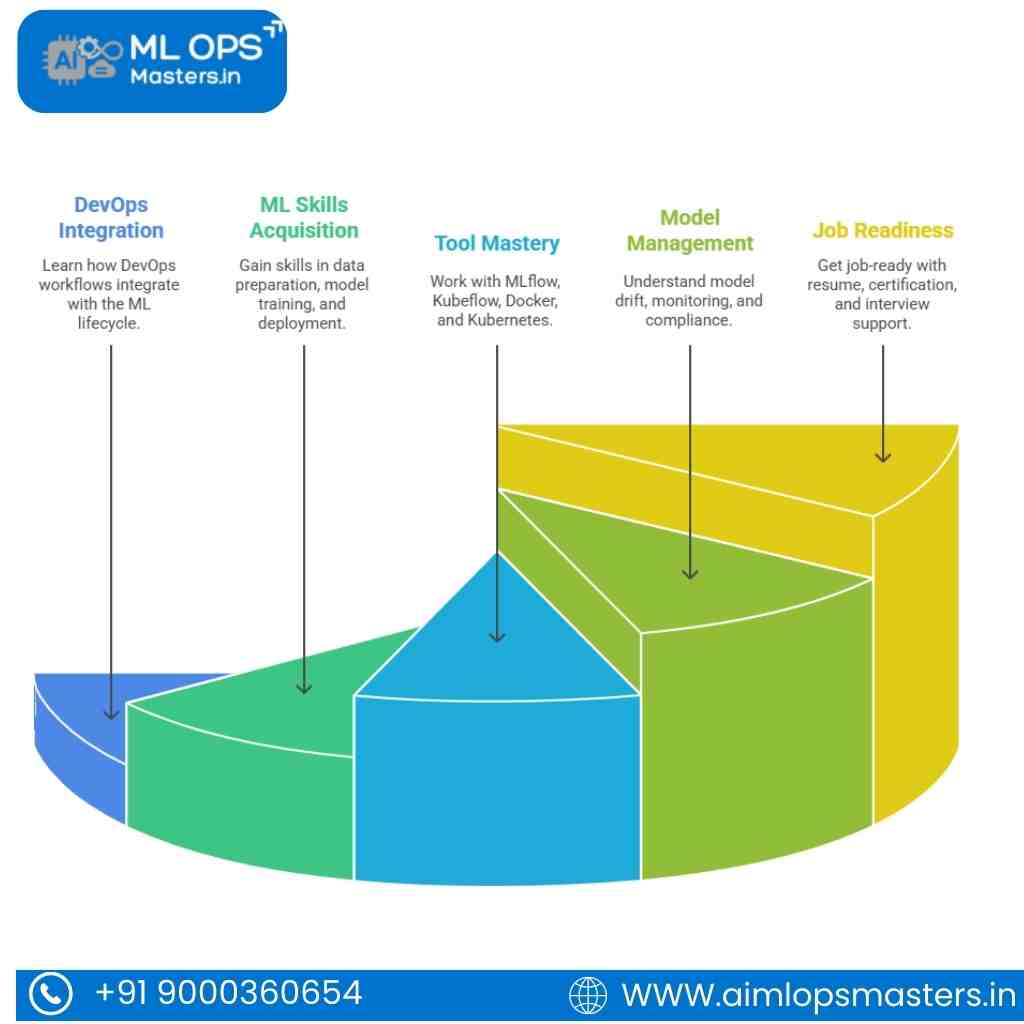
- Understand end-to-end Artificial Intelligence workflows across the AI and Machine Learning lifecycle
- Gain practical skills in data preparation, model training, evaluation, and deployment
- Work with industry-standard AI tools and platforms through real-time labs and projects
- Learn model monitoring, performance optimization, and scalability for reliable AI systems
- Get job-ready for Artificial Intelligence and Machine Learning roles with resume, certification, and interview support
Prerequisites of Artificial Intelligence
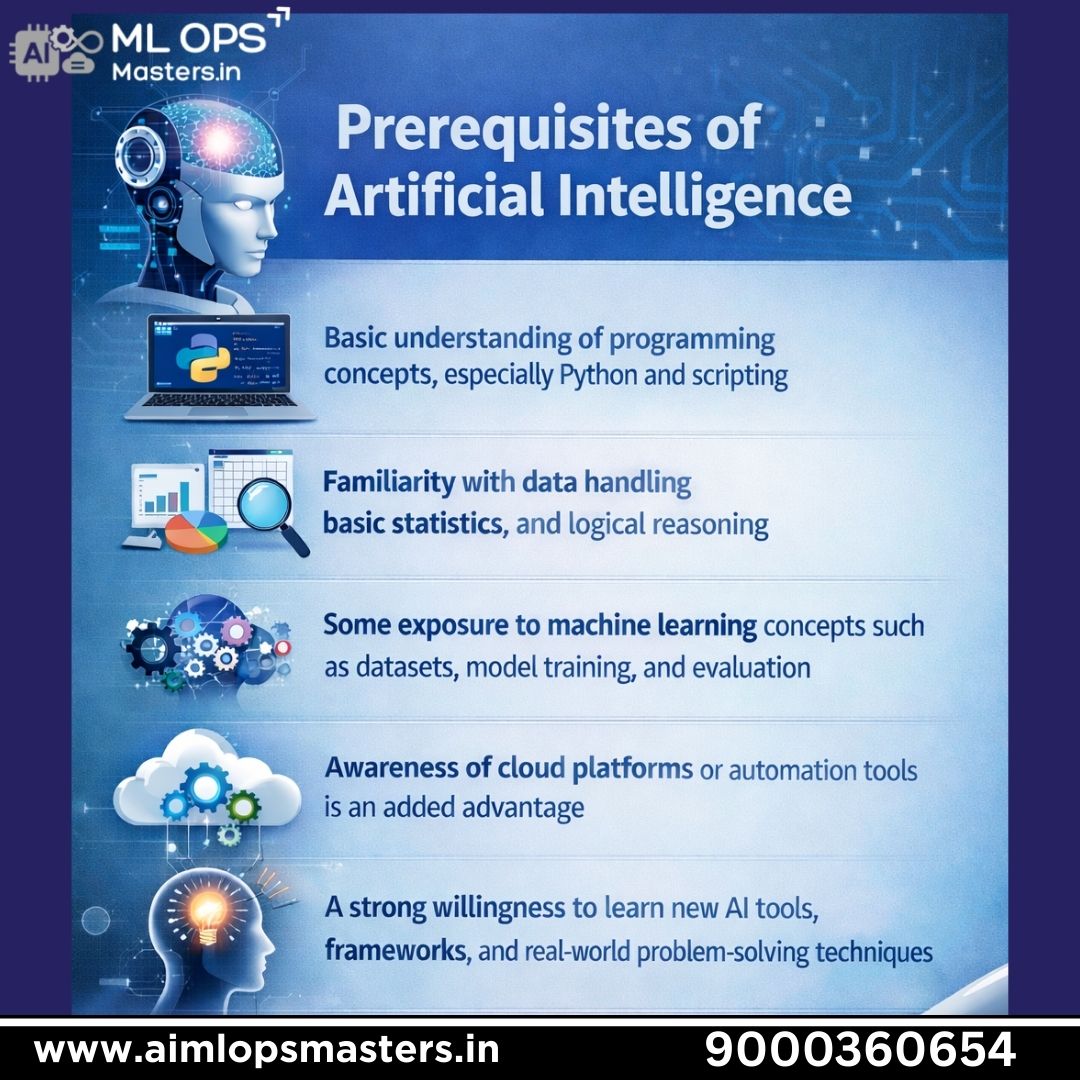
- Basic understanding of programming concepts, especially Python and scripting
- Familiarity with data handling, basic statistics, and logical reasoning
- Some exposure to machine learning concepts such as datasets, model training, and evaluation
- Awareness of cloud platforms or automation tools is an added advantage
- A strong willingness to learn new AI tools, frameworks, and real-world problem-solving techniques
Who should learn Artificial Intelligence Course
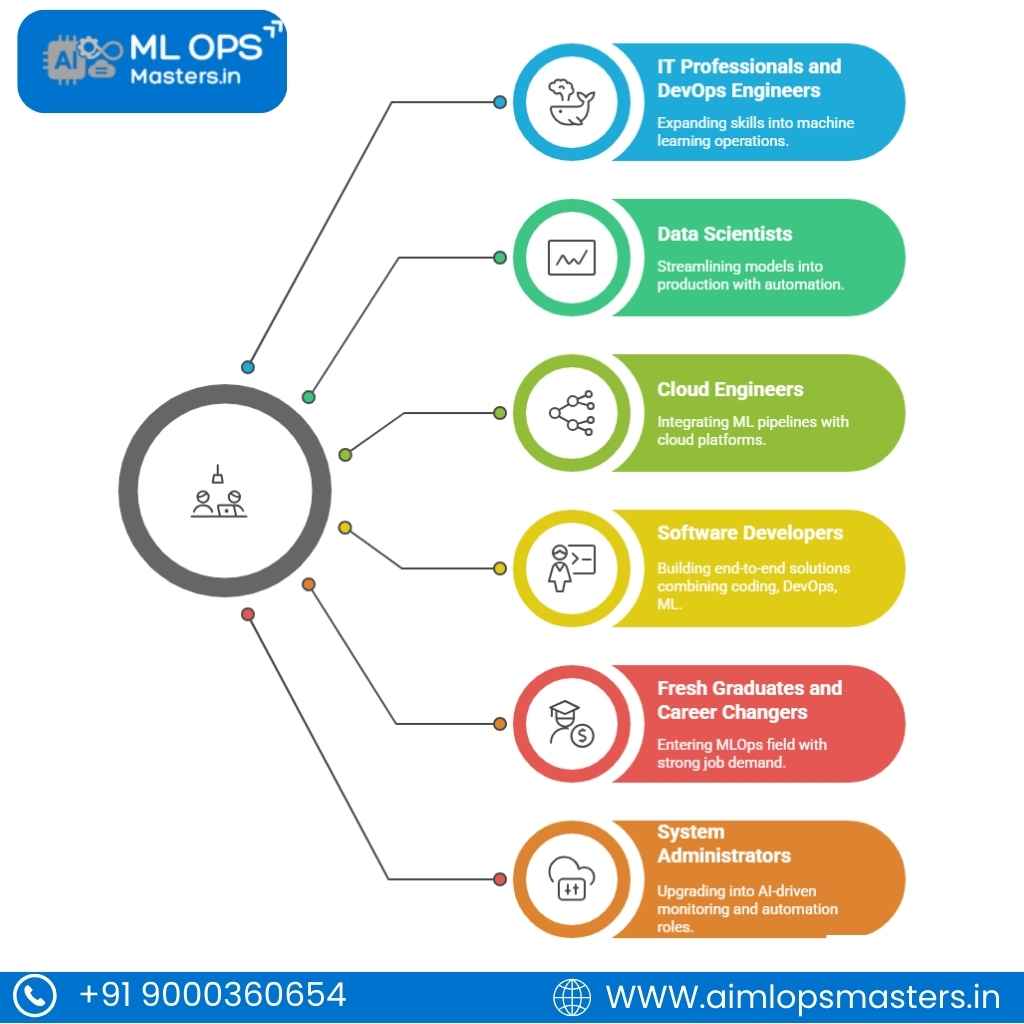
- IT professionals and engineers looking to expand their skills into Artificial Intelligence and Machine Learning
- Data scientists aiming to build, deploy, and scale AI models in real-world environments
- Cloud engineers interested in integrating AI workflows with modern cloud platforms
- Software developers who want to build end-to-end AI-powered applications
- System administrators looking to transition into AI-driven automation, monitoring, and intelligent systems
- System administrators wanting to upgrade into AI-driven monitoring, deployment, and automation roles.
Artificial Intelligence in Hyderabad
Course Outline
Learn the fundamentals of Artificial Intelligence, key workflows, and how automation supports scalable AI-driven projects across industries.
Master Git and GitHub to manage Artificial Intelligence code, datasets, and experiments effectively. Learn best practices for team collaboration on AI models and pipelines, along with branching strategies that support smooth model development and deployment.
Build automated pipelines for Artificial Intelligence models using CI/CD tools like Jenkins, GitLab CI/CD, and GitHub Actions. Learn to integrate data and code validation to ensure faster, reliable, and consistent AI model delivery.
Learn Docker for packaging Artificial Intelligence models and Kubernetes for scaling AI deployments. Understand how containerization improves reproducibility, efficiency, and reliability, and practice deploying AI services on clustered environments.
Use tools like MLflow, DVC, and TensorBoard for Artificial Intelligence model versioning and experiment tracking. Learn effective hyperparameter tuning techniques and gain hands-on experience in monitoring model performance across different datasets.
Deploy Artificial Intelligence models as REST APIs, microservices, and serverless functions, and learn to deploy them on AWS SageMaker, Azure Machine Learning, and Google Cloud AI Platform using scalable release strategies like A/B testing and canary deployments.
Implement production monitoring for Artificial Intelligence models using tools like Prometheus and Grafana. Learn anomaly detection, model drift monitoring, and alerting to ensure reliable and scalable AI systems.
Automate Artificial Intelligence retraining workflows, testing, and data pipelines, while learning to scale AI workloads using cloud-native tools and apply cost-optimization strategies for handling large datasets efficiently.
Work on real-time Artificial Intelligence projects using hands-on labs and cloud-based tools. Solve practical business use cases and present end-to-end AI solutions that demonstrate automation, scalability, and real-world impact.
Artificial Intelligence Course In Hyderabad
Modes
Classroom Training
- Daily Recorded Videos
- One - One Project Guidence
- Practical Application
- Get support till you are placed
- Mock Interviews
- Well-Organized Syllabus
Online Training
- Flexible Learning Schedule
- Recorded Video access
- Whatsapp Group Access
- Doubt Clearing Sessions
- Daily Session Recordings
- Real-world Projects
Corporate Training
- Live Project Training
- On-site or Virtual Training Sessions
- Doubt Clearing Sessions
- Daily Class Recordings
- Team-building Activities
- Video Material Access
Artificial Intelligence Coaching In Hyderabad
Career Opportunities
01
Artificial Intelligence Engineer
AI Engineers design, build, and deploy intelligent systems using machine learning and deep learning models. They work on real-world applications such as recommendation systems, automation platforms, and intelligent analytics solutions.
02
Machine Learning Engineer
Machine Learning Engineers focus on developing, training, and optimizing ML models. Their role involves working with large datasets, selecting algorithms, improving model accuracy, and deploying scalable ML solutions into production environments.
03
Data Scientist
Data Scientists use Artificial Intelligence and advanced analytics to extract insights from structured and unstructured data. They help businesses make data-driven decisions by building predictive models and solving complex business problems.
04
NLP Engineer
Natural Language Processing Engineers build AI systems that understand and process human language. They work on applications such as chatbots, voice assistants, sentiment analysis, and document automation systems.
05
Computer Vision Engineer
Computer Vision Engineers develop AI solutions that analyze images and videos. Their work includes facial recognition, medical imaging, object detection, and video analytics used in industries like healthcare, security, and retail.
06
AI Consultant / AI Specialist
AI Consultants help organizations identify opportunities to apply Artificial Intelligence effectively. They design AI strategies, guide implementation, and ensure AI solutions align with business goals across different domains.
Skills Developed
Continuous Integration & Deployment for ML
You’ll master building CI/CD pipelines not just for code, but also for ML models. This ensures smooth and automated delivery of models into production environments.
Model Monitoring & Performance Tracking
Skills in monitoring deployed models, tracking drift, and ensuring accuracy over time are developed. This helps keep ML systems reliable in real-world use.
Data Pipeline Management
You will learn to design and manage scalable data pipelines. These pipelines handle data ingestion, preprocessing, and transformation critical for machine learning workflows.
Cloud & Containerization Skills
Training builds expertise in Docker, Kubernetes, and cloud platforms like AWS, Azure, and GCP. These skills help you deploy and scale ML models in production environments.
Automation & Orchestration
You’ll develop automation skills for tasks like model retraining, testing, and deployment. Orchestration tools help maintain consistency across ML workflows.
Collaboration & Workflow Integration
Strong collaboration skills are fostered, bridging Data Science and DevOps teams. You’ll learn to integrate workflows across coding, data, and production systems effectively.
Artificial Intelligence Coaching In Hyderabad
Career Opportunities
01
Artificial Intelligence Engineer
AI Engineers design, build, and deploy intelligent systems using machine learning and deep learning models. They work on real-world applications such as recommendation systems, automation platforms, and intelligent analytics solutions.
02
Machine Learning Engineer
Machine Learning Engineers focus on developing, training, and optimizing ML models. Their role involves working with large datasets, selecting algorithms, improving model accuracy, and deploying scalable ML solutions into production environments.
03
Data Scientist
Data Scientists use Artificial Intelligence and advanced analytics to extract insights from structured and unstructured data. They help businesses make data-driven decisions by building predictive models and solving complex business problems.
04
NLP Engineer
Natural Language Processing Engineers build AI systems that understand and process human language. They work on applications such as chatbots, voice assistants, sentiment analysis, and document automation systems.
05
Computer Vision Engineer
Computer Vision Engineers develop AI solutions that analyze images and videos. Their work includes facial recognition, medical imaging, object detection, and video analytics used in industries like healthcare, security, and retail.
06
AI Consultant / AI Specialist
AI Consultants help organizations identify opportunities to apply Artificial Intelligence effectively. They design AI strategies, guide implementation, and ensure AI solutions align with business goals across different domains.
Artificial Intelligence Course Online Certifications
- Gain online AI certifications validating end-to-end AI, DevOps, and MLOps lifecycle skills.
- Learn AI model deployment, automation, and CI/CD pipelines for real-world applications.
- Get certified in industry-standard tools like Docker, Kubernetes, MLflow, and cloud platforms.
- Build expertise for high-demand roles such as AI Engineer, MLOps Engineer, and Cloud ML Architect.
- Earn globally recognized AI certifications to unlock career opportunities in India and abroad.
Companies that Hire From Amazon Masters




Artificial Intelligence Course Training In Hyderabad
Benefits
- Hands-On AI Learning with Real Projects
The course delivers practical AI experience through live projects and case studies, exposing learners to real-world AI and MLOps pipelines and preparing them for industry from day one.
- Expert Guidance from Industry Professionals
Learn directly from professionals with real-world experience in Artificial Intelligence, MLOps, and model deployment, ensuring training aligned with current industry standards and demands.
- Comprehensive Artificial Intelligence Curriculum
The program covers core AI concepts to advanced MLOps workflows, including CI/CD, automation, model deployment, monitoring, and scalable AI systems in production.
- Career-Oriented Artificial Intelligence Training
This course prepares you for high-demand AI roles like MLOps Engineer, Cloud ML Specialist, and AI DevOps Consultant, with complete resume and interview support.
- Exposure to Leading AI Tools & Platforms
Gain hands-on experience with industry-standard AI tools like Docker, Kubernetes, MLflow, TensorFlow, and major cloud platforms, enabling you to confidently handle real-world AI projects.
- Global Recognition & AI Certifications
Earn globally recognized Artificial Intelligence certifications that enhance your career prospects and unlock job opportunities in both Indian and international markets.
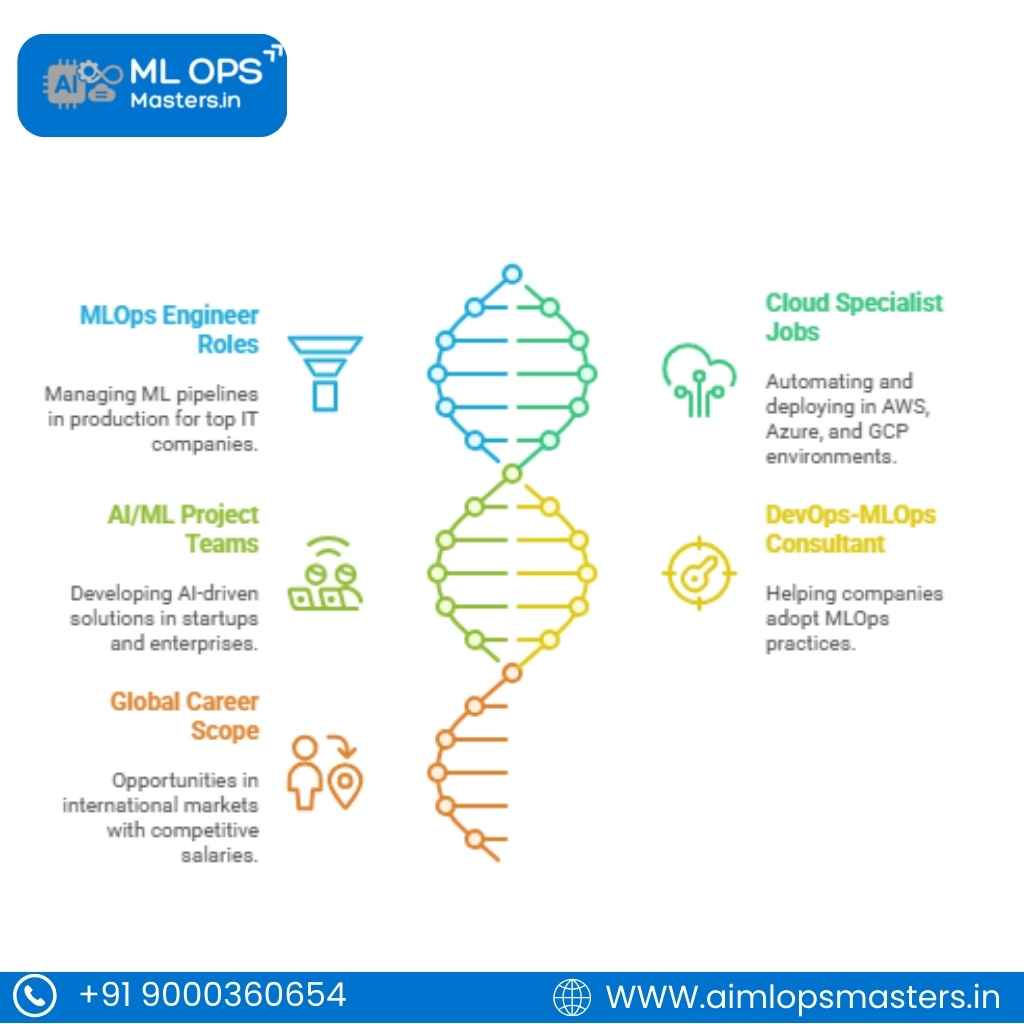
Artificial Intelligence Placement Opportunities
- MLOps Engineer – Roles in leading IT companies managing AI/ML pipelines in production.
- Cloud AI Specialist – High-demand positions across AWS, Azure, and GCP for AI automation and deployment.
- AI/ML Project Teams – Opportunities in startups and enterprises building AI-driven solutions.
- AI DevOps–MLOps Consultant – Freelance and full-time roles supporting organizations in MLOps adoption.
- Global Career Scope – Access to international AI roles with competitive salary packages.
Artificial Intelligence Market Trend
Artificial Intelligence Market Trend: Rapid MLOps Adoption
Enterprises are increasingly adopting MLOps to efficiently manage AI and machine learning pipelines, driven by the need for automation, scalability, and faster deployment of AI models in production environments.
AI Integration with Cloud Platforms
Leading cloud providers like AWS, Azure, and GCP offer specialized AI and MLOps services, enabling enterprises to implement AI solutions faster and driving higher demand for skilled professionals.
Growing Demand for AI-Powered Automation
AI-driven automation is transforming model training, testing, and monitoring. As industries adopt Artificial Intelligence, MLOps tools are becoming essential for improving efficiency, accuracy, and reducing manual effort.
Rise in AI Model Governance and Compliance
Stricter data privacy regulations are driving enterprises to adopt explainable AI and robust model governance. AI and MLOps frameworks are evolving to ensure compliance, security, and transparency across industries like finance and healthcare.
Increased Collaboration in Artificial Intelligence
AI and MLOps bridge the gap between data scientists and IT/DevOps teams, fostering faster innovation cycles and delivering more reliable, production-ready AI solutions.
Expanding Use of Artificial Intelligence Across Industries
Industries such as retail, finance, healthcare, and e-commerce are increasingly adopting AI. Applications range from fraud detection to personalized recommendations, driving higher demand and market growth for AI solutions.
Surge in Open-Source AI Tools
Open-source platforms like MLflow, Kubeflow, and TensorFlow Extended are accelerating AI adoption. Enterprises favor these tools for their flexibility, customization, and cost-effective deployment of AI solutions.
Rising Job Opportunities in Artificial Intelligence
Demand for skilled AI professionals is growing rapidly. Roles such as AI Engineer, MLOps Specialist, and Cloud AI Engineer are becoming highly sought-after across industries.
What is driving the AI market growth?
Rapid adoption of AI across industries for automation, efficiency, and decision-making drives growth.
Which industries are adopting AI the fastest?
Finance, healthcare, retail, e-commerce, and manufacturing are leading AI adoption.
Why is MLOps important for AI?
MLOps streamlines AI model deployment, monitoring, and scalability in production.
How is cloud computing influencing AI adoption?
Cloud platforms like AWS, Azure, and GCP enable faster, cost-effective AI deployment.
Are open-source AI tools gaining popularity?
Yes, tools like MLflow, Kubeflow, and TensorFlow Extended are widely adopted.
What roles are in high demand in AI?
AI Engineer, MLOps Specialist, Cloud AI Engineer, and AI DevOps Consultant
How does AI improve business processes?
AI enhances automation, predictive analytics, personalization, and operational efficiency.
Is AI adoption global or limited to certain regions?
AI adoption is global, with strong demand in India, the US, Europe, and emerging markets.
Why is AI governance becoming important?
Stricter data privacy laws require explainable, secure, and compliant AI models.
What is the future trend in AI?
Growing AI-powered automation, cross-industry applications, and cloud integration will shape the future.